Packing & clothing
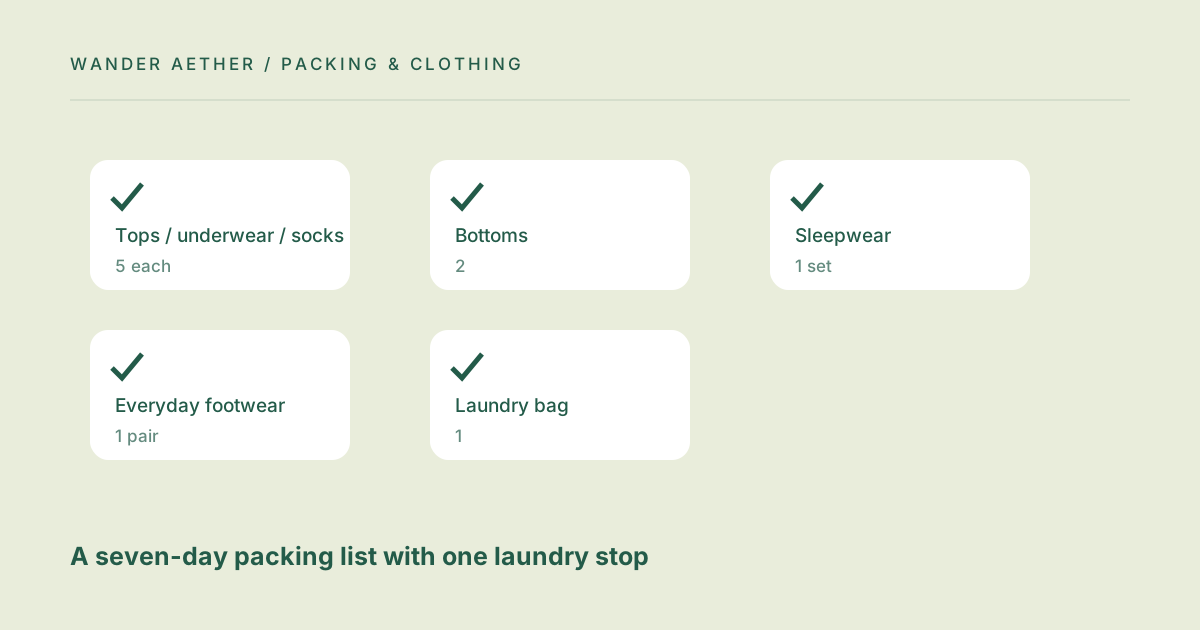
A seven-day packing list with one laundry stop
Build a practical one-week clothing and essentials list.
Forty practical guides about packing, travel clocks, budgets, geographic scale and usable days.
Build a practical one-week clothing and essentials list.
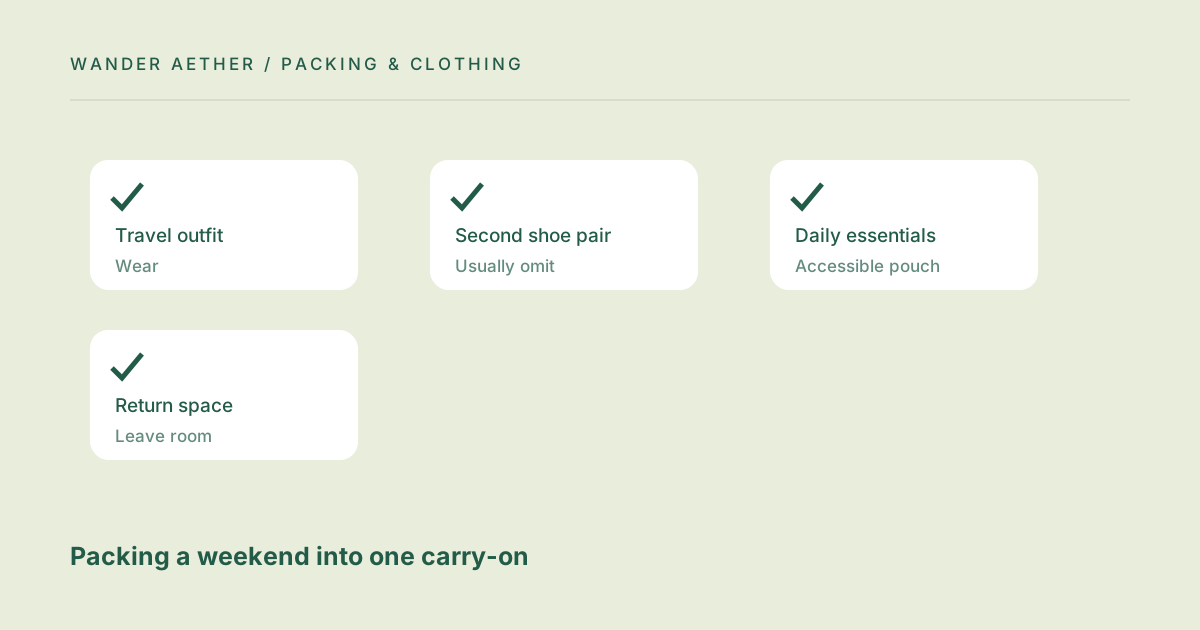
Plan a small weekend bag without omitting essentials.
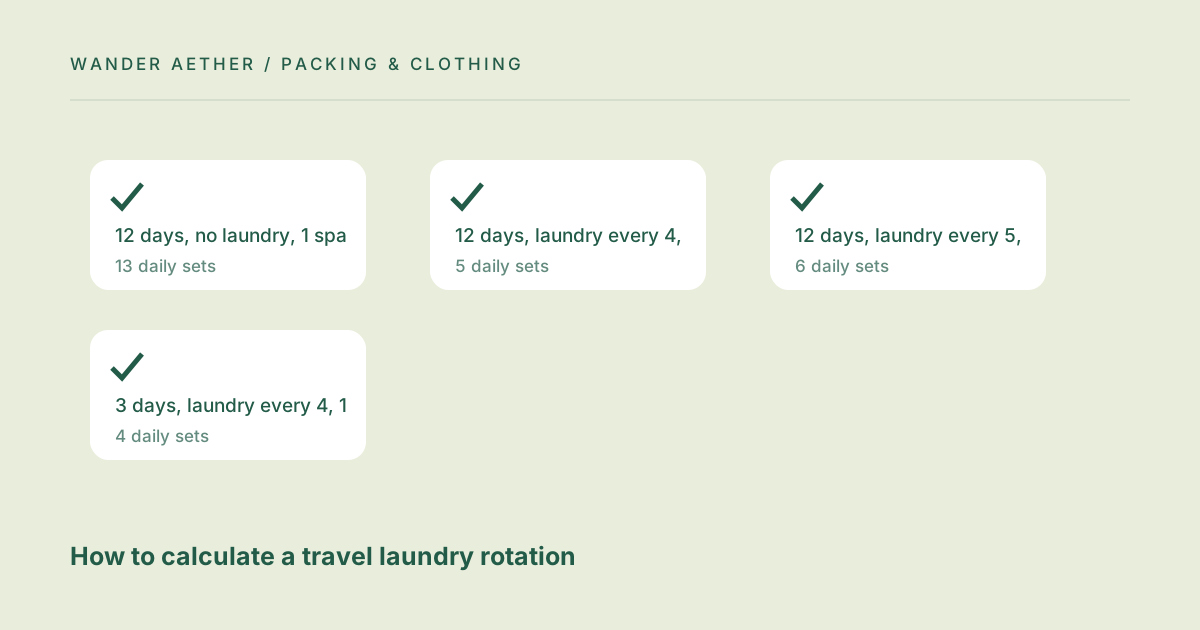
Calculate clothing counts from reliable laundry intervals.
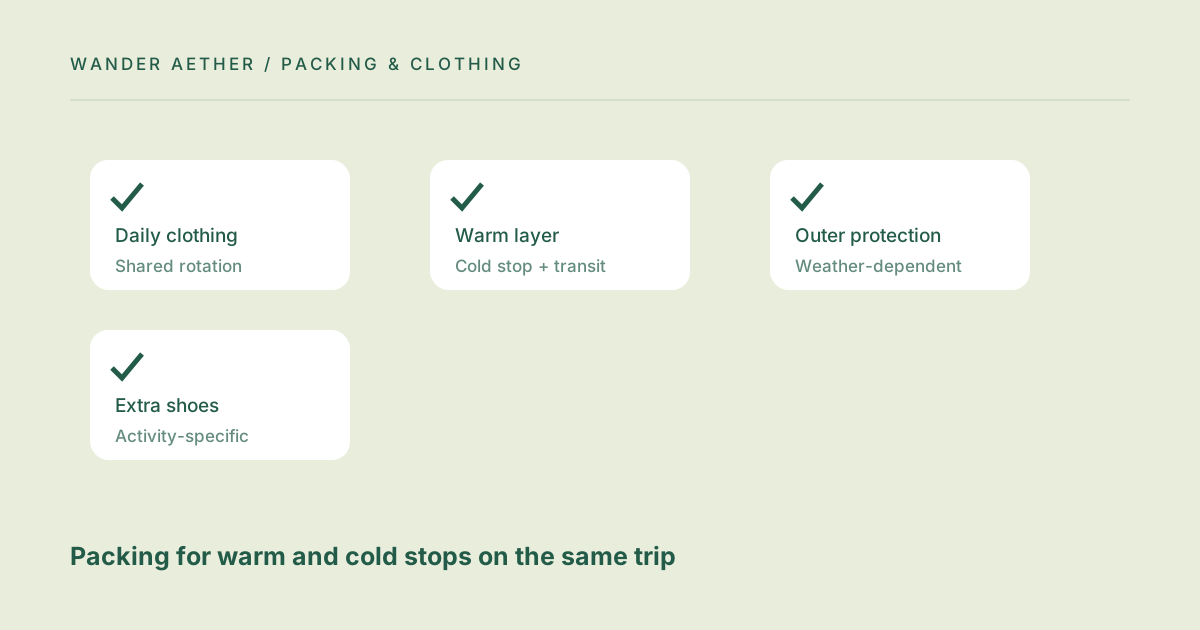
Handle mixed climates without packing two complete wardrobes.
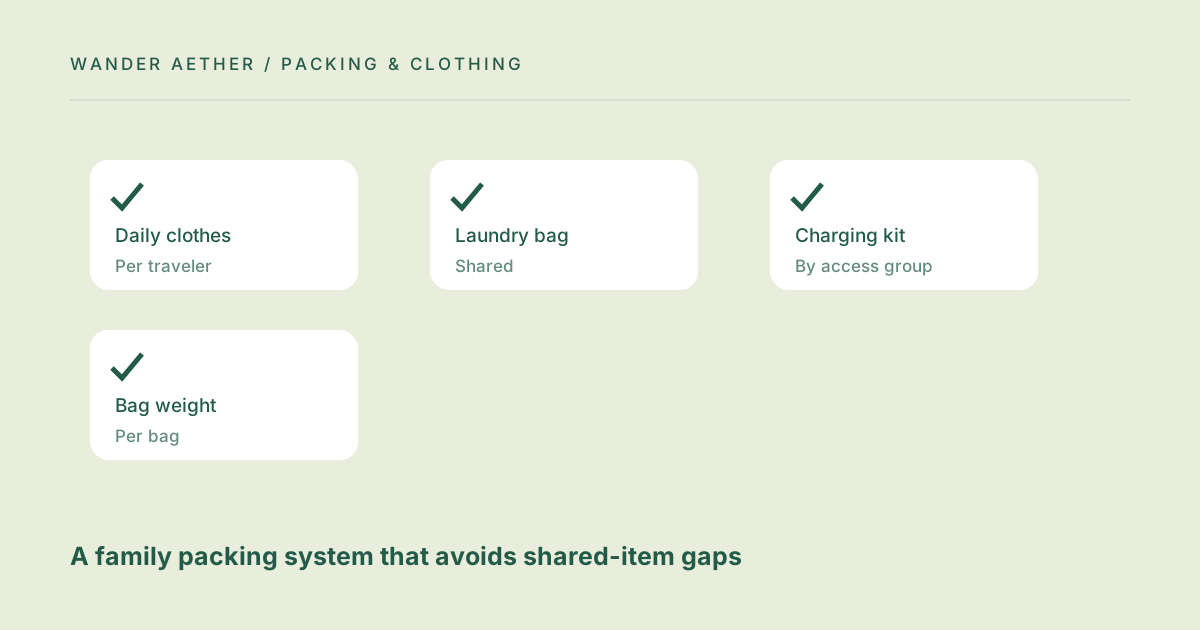
Allocate family packing ownership and distinguish personal from shared quantities.
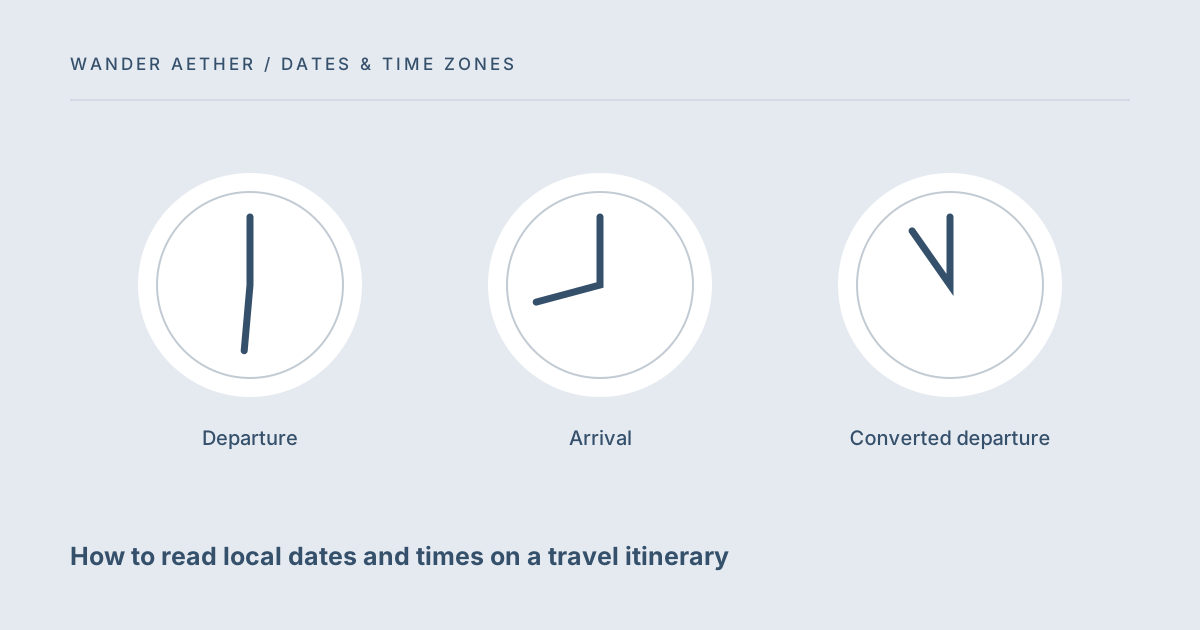
Interpret departure and arrival clocks without confusing their local dates.
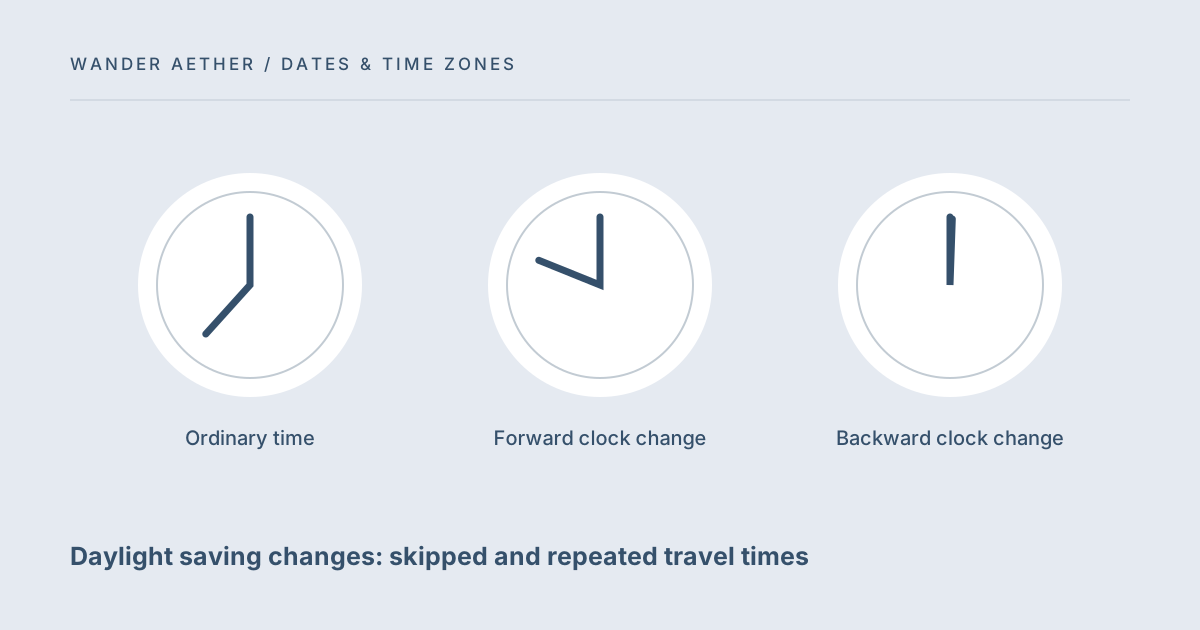
Resolve nonexistent and ambiguous local times around clock changes.
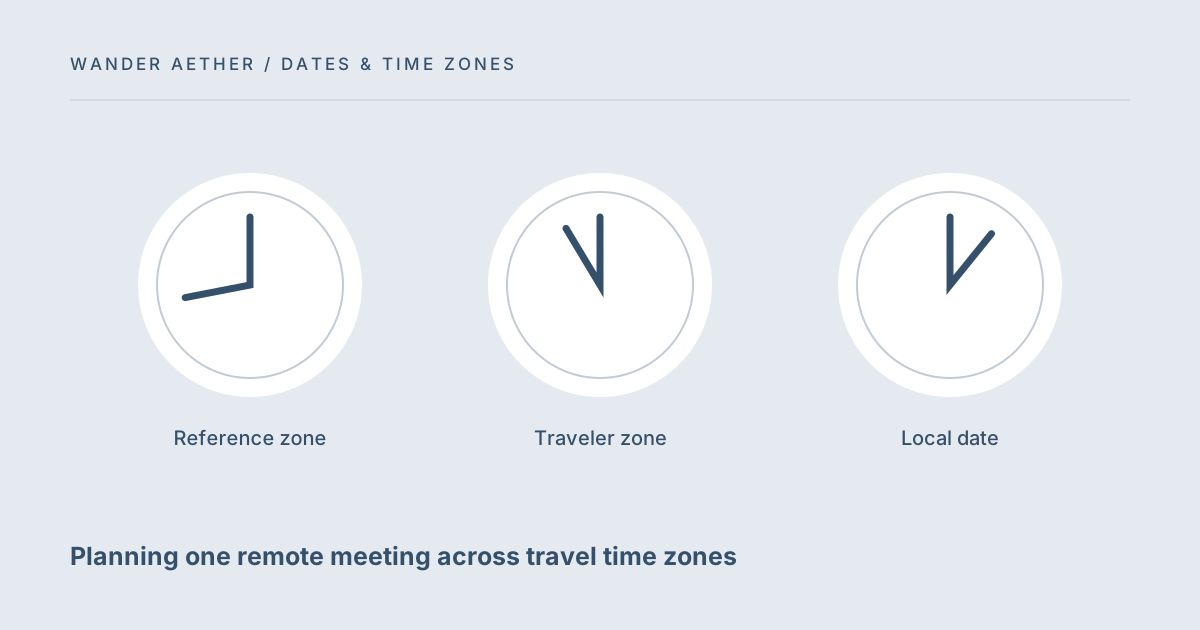
Choose and communicate one meeting instant across different local clocks.
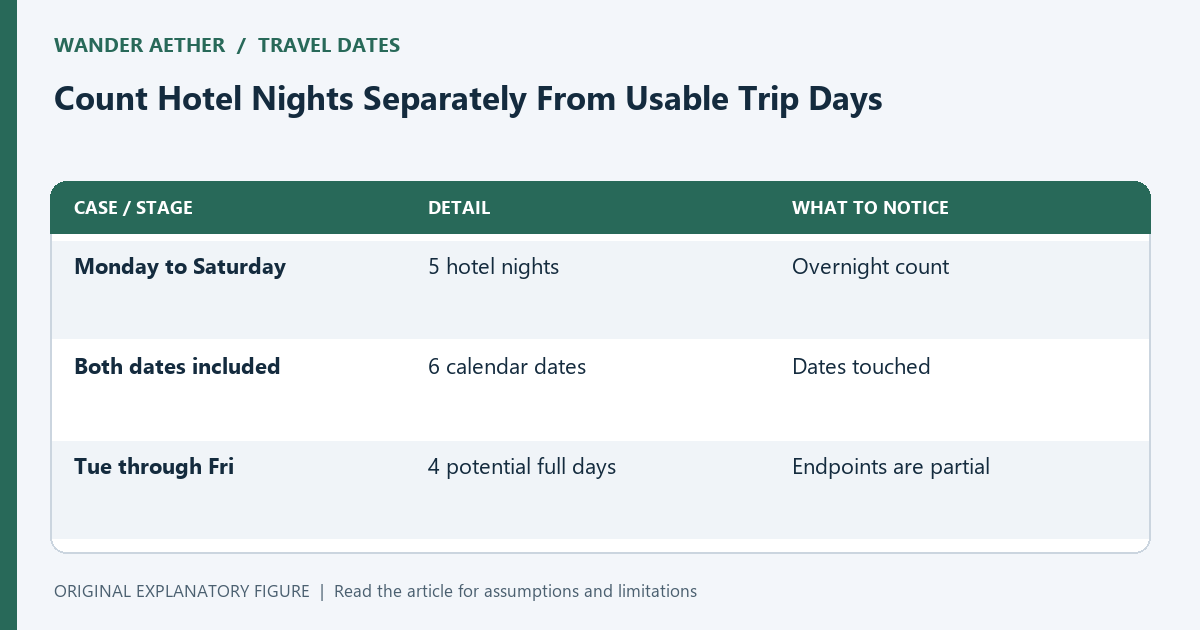
Distinguish inclusive travel dates from booked accommodation nights.
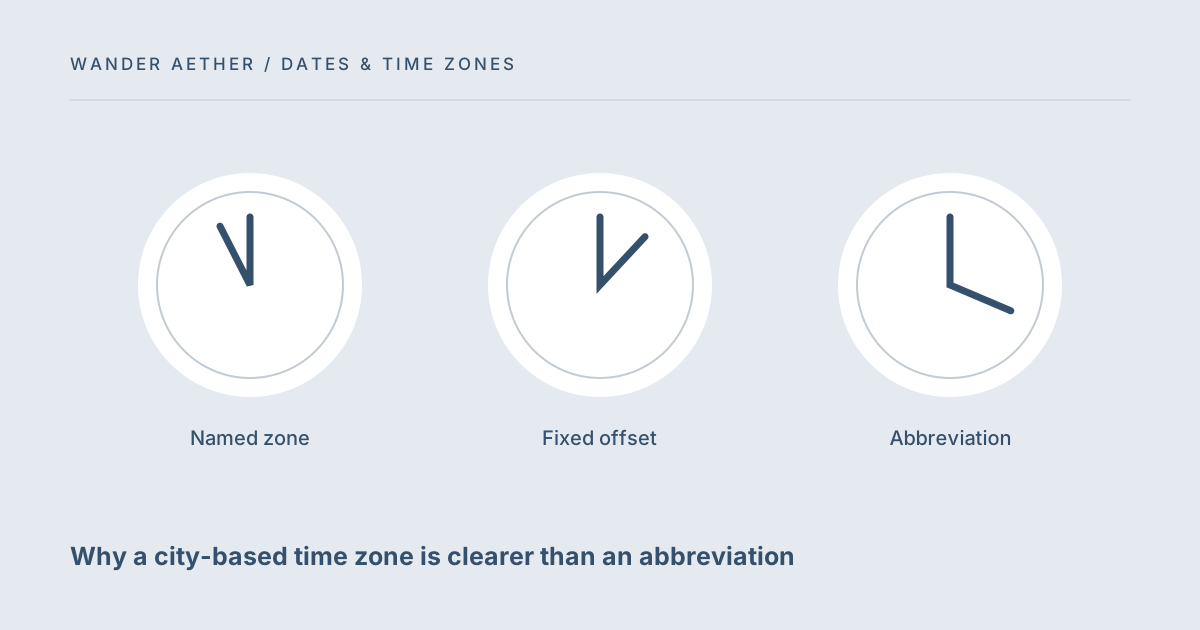
Select the correct named time zone and avoid ambiguous abbreviations.
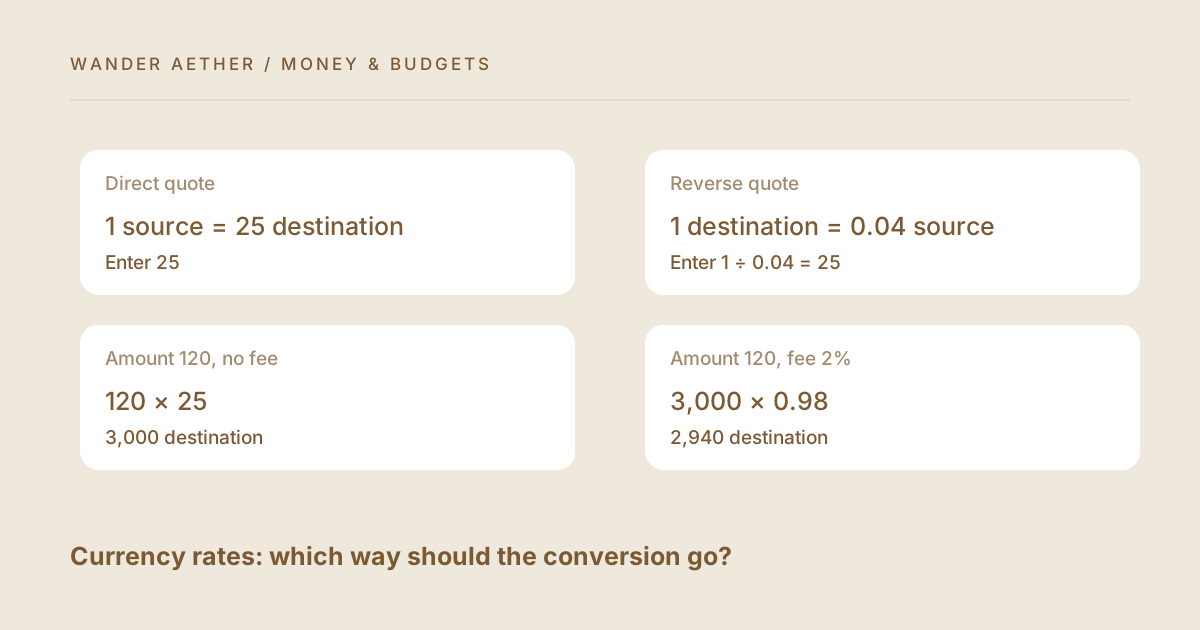
Apply a manually supplied exchange rate in the correct direction.
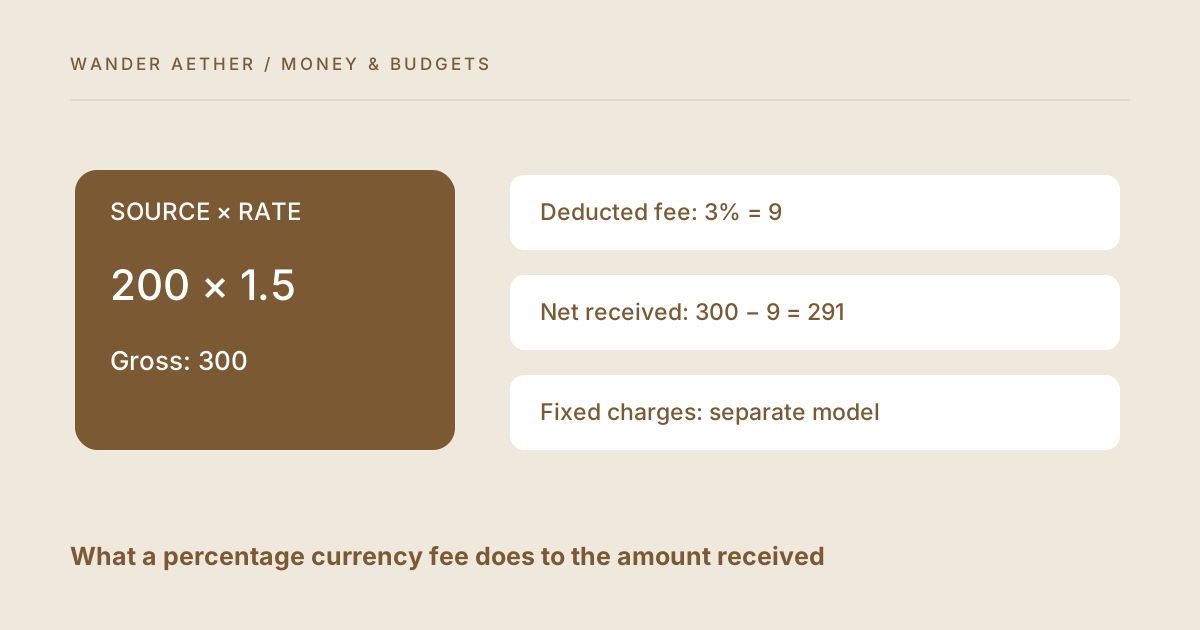
Estimate net destination currency under an explicit percentage-fee assumption.
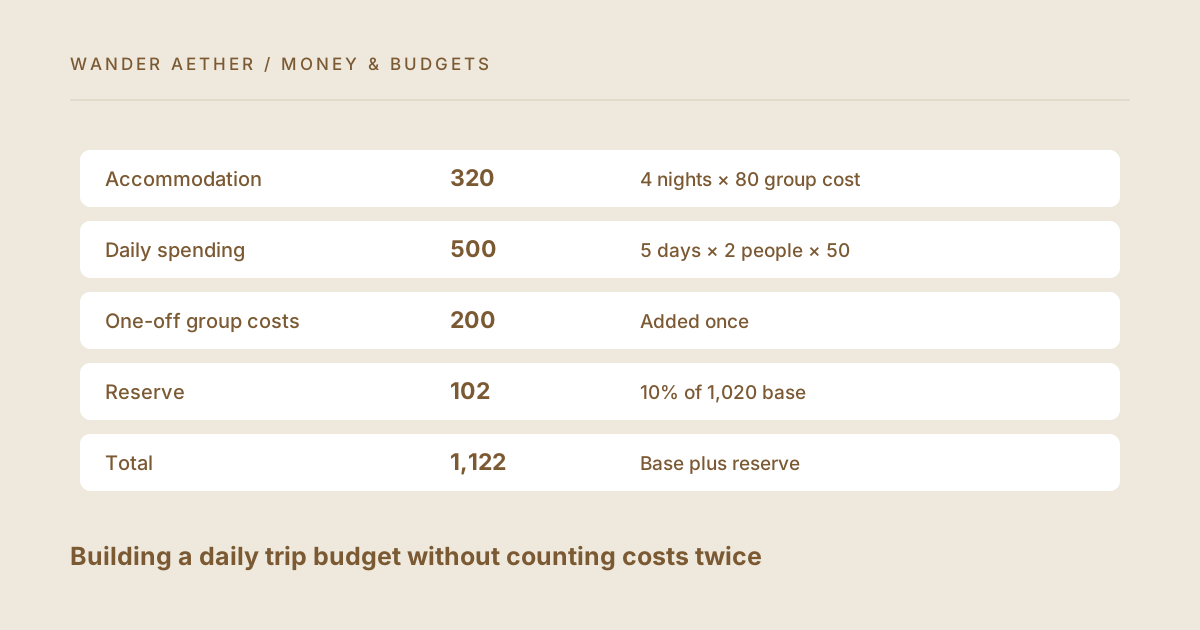
Create a group travel estimate with consistent units and cost frequency.
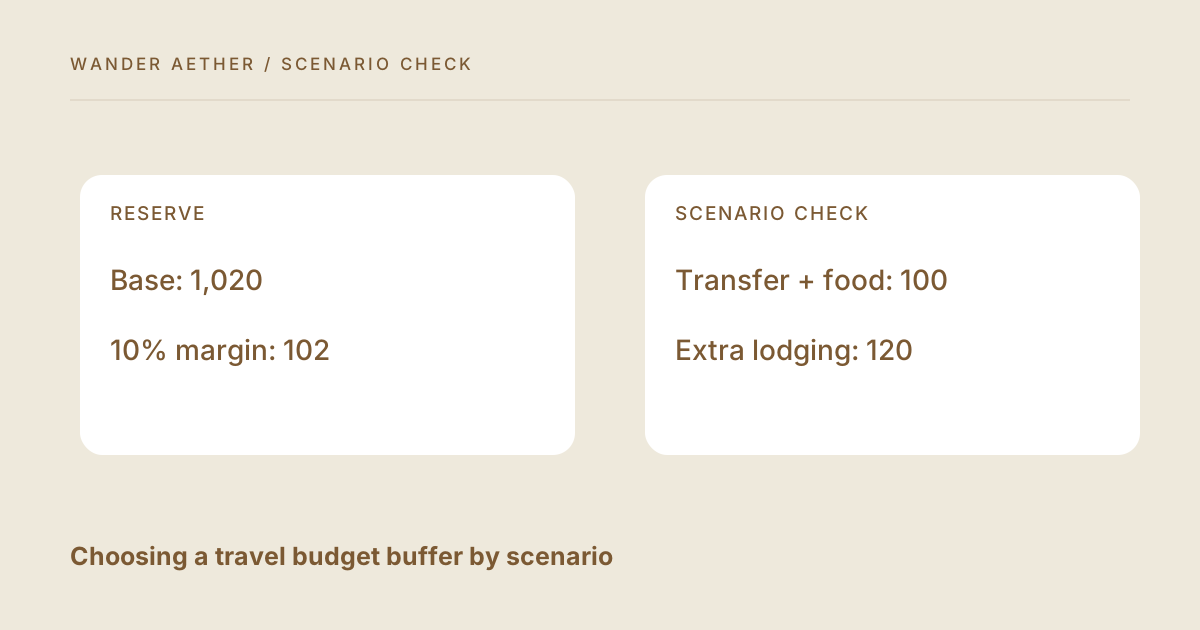
Size and explain a contingency reserve instead of adding arbitrary padding.
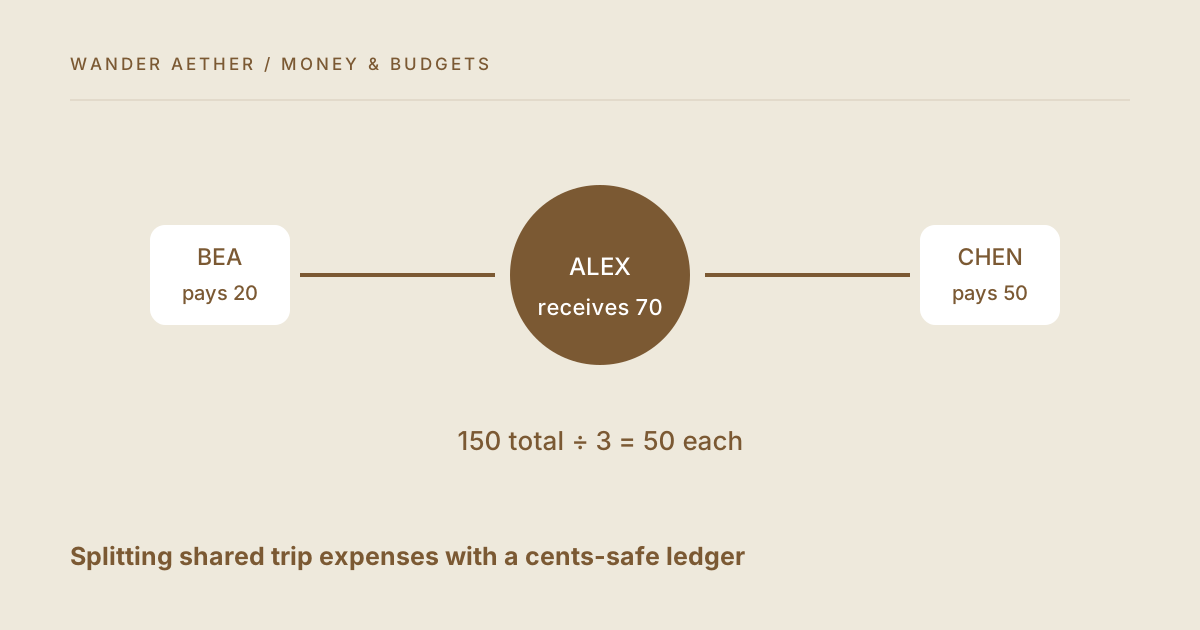
Settle equal-share group expenses from each traveler’s total paid.
Interpret great-circle distance without mistaking it for a real route.
Validate coordinate order, signs and decimal format.
Convert and label distance units accurately for planning comparisons.
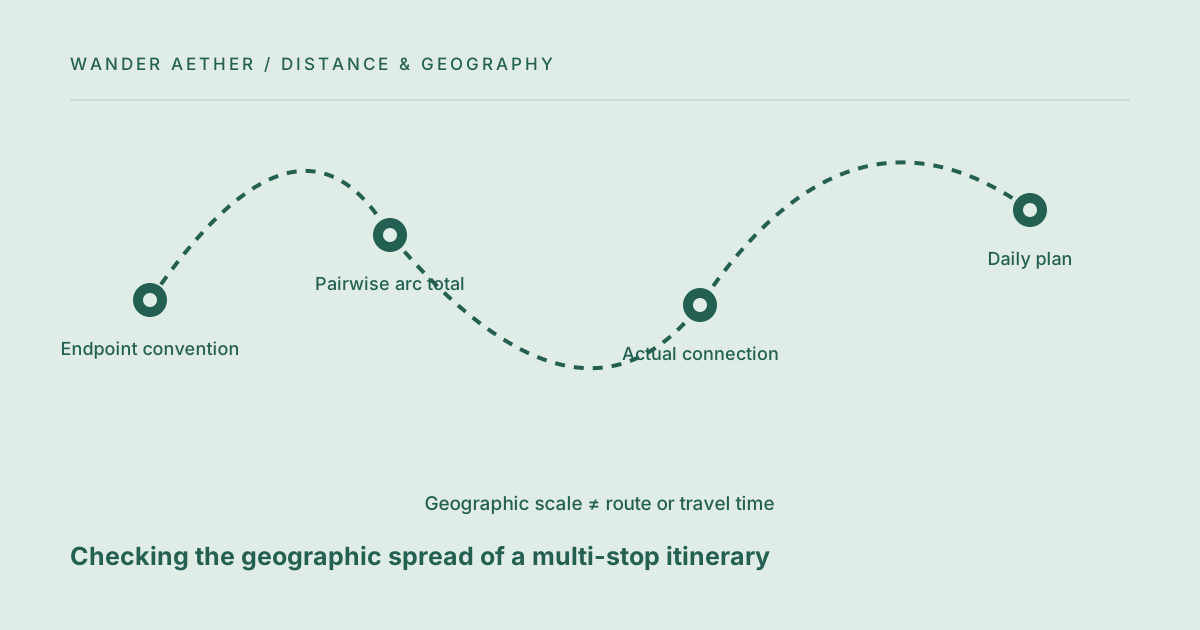
Compare pairwise geographic legs without pretending they form a usable route.
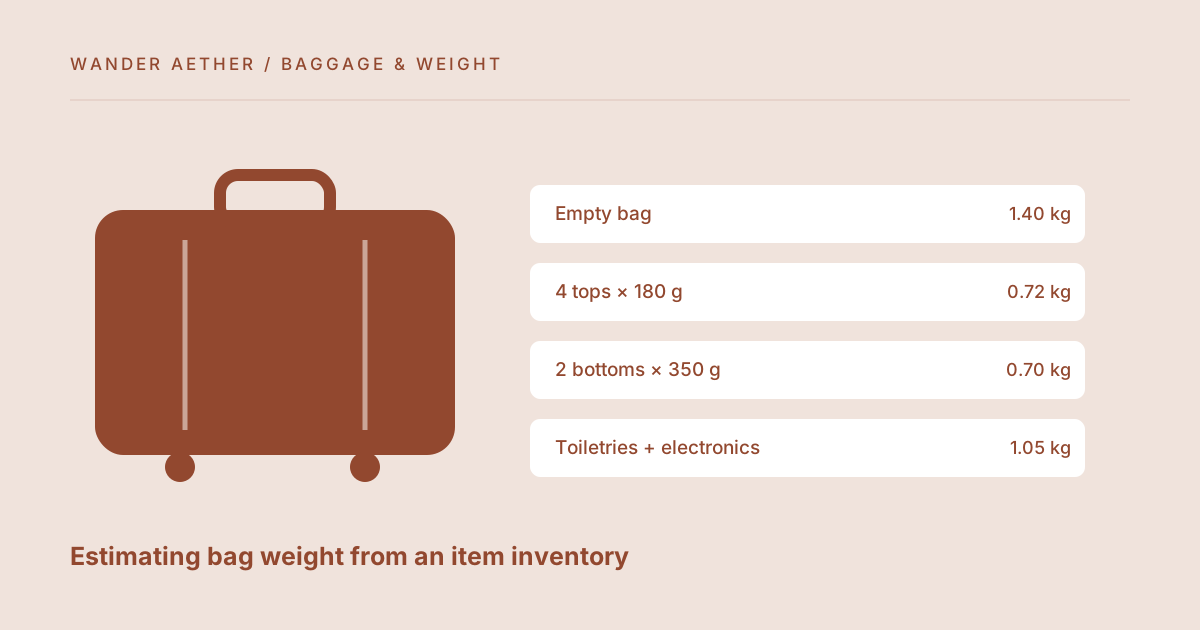
Build a grams-per-item inventory including the empty bag.
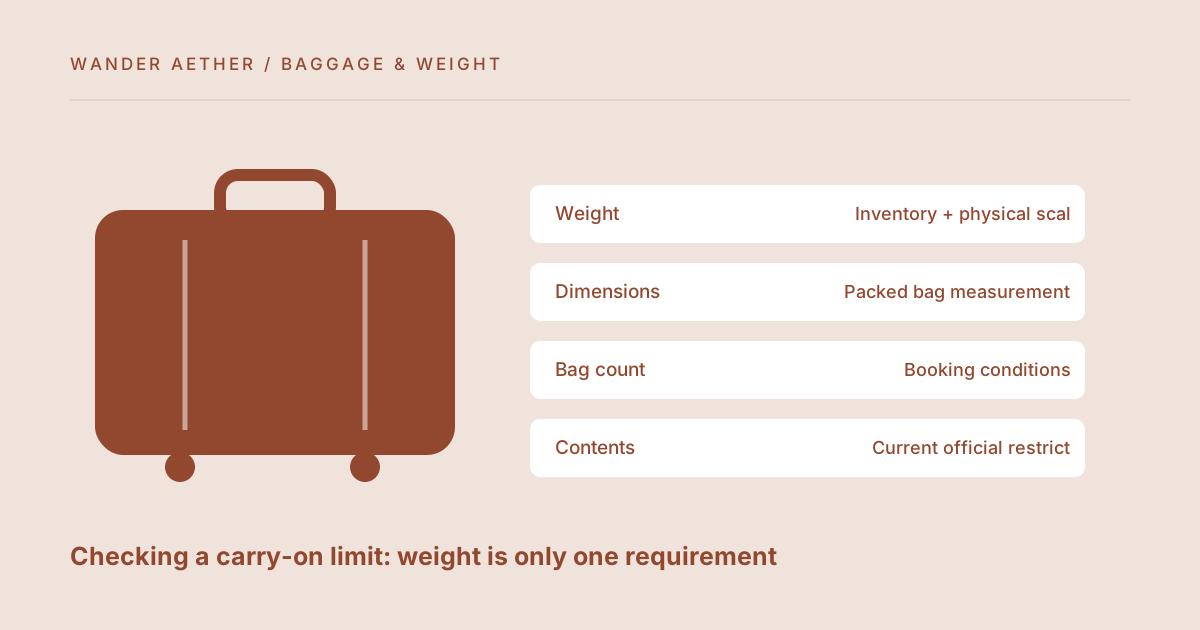
Review entered weight allowances separately from size and ticket conditions.
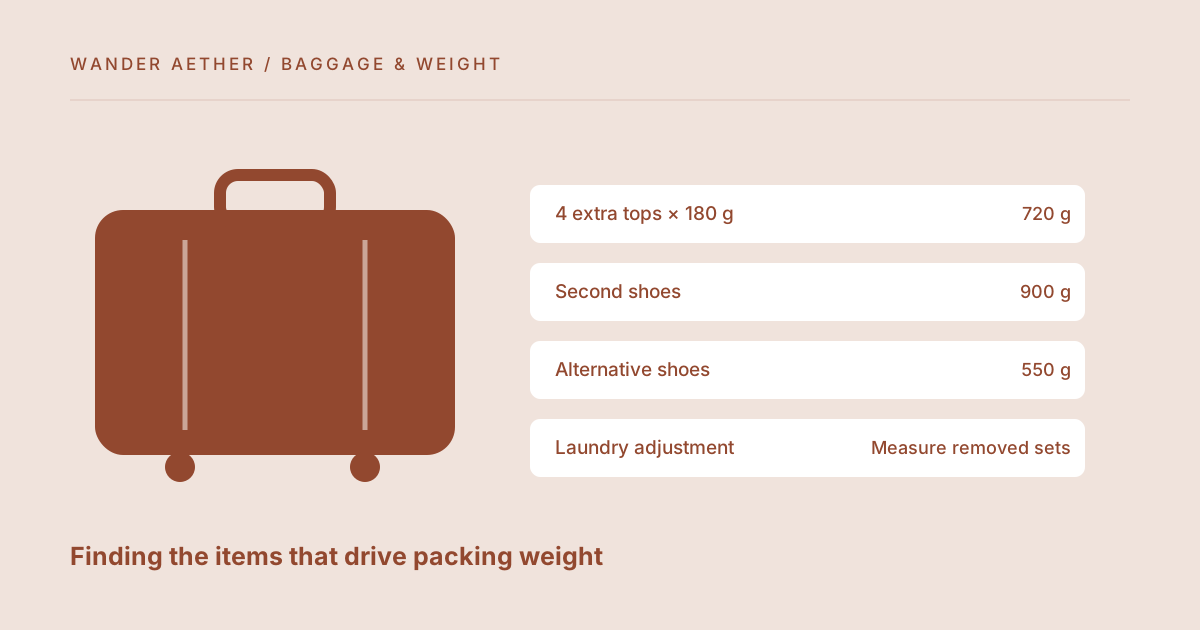
Prioritize meaningful weight reductions from measured item contributions.
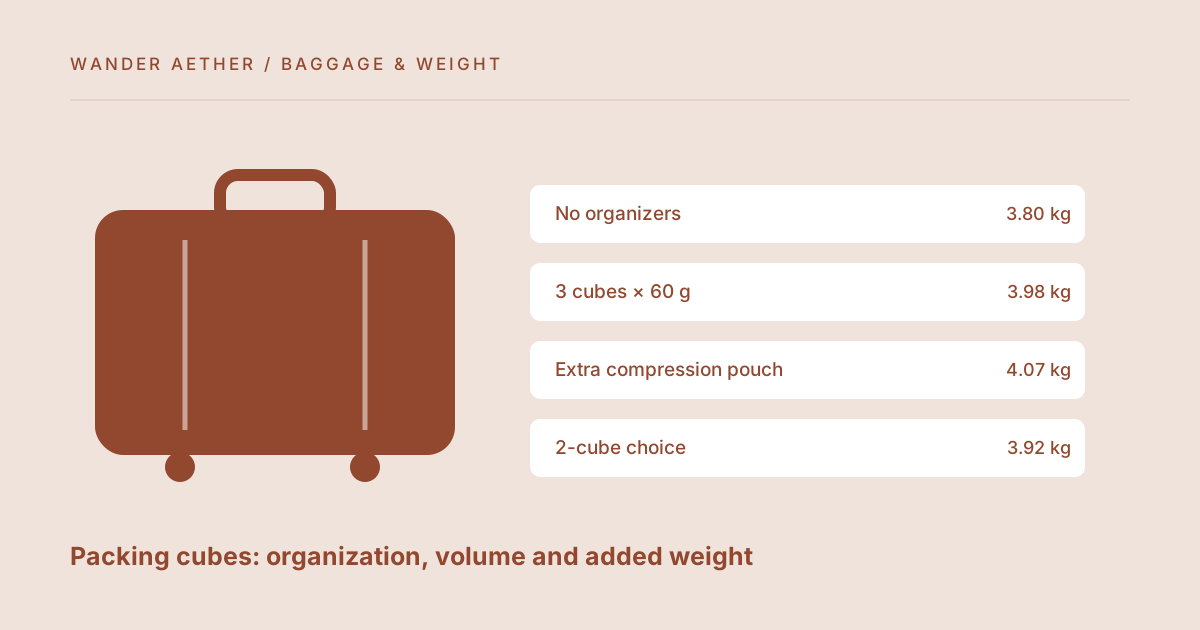
Evaluate organizers without assuming they reduce item mass.
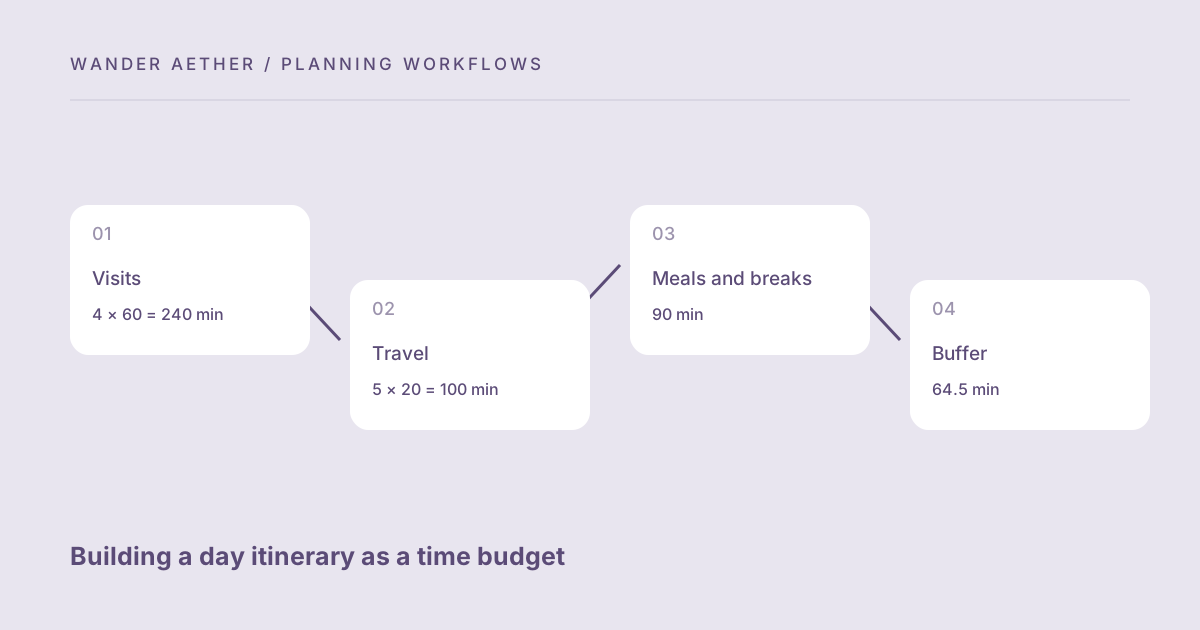
Fit sightseeing, transfers and breaks into a realistic available window.
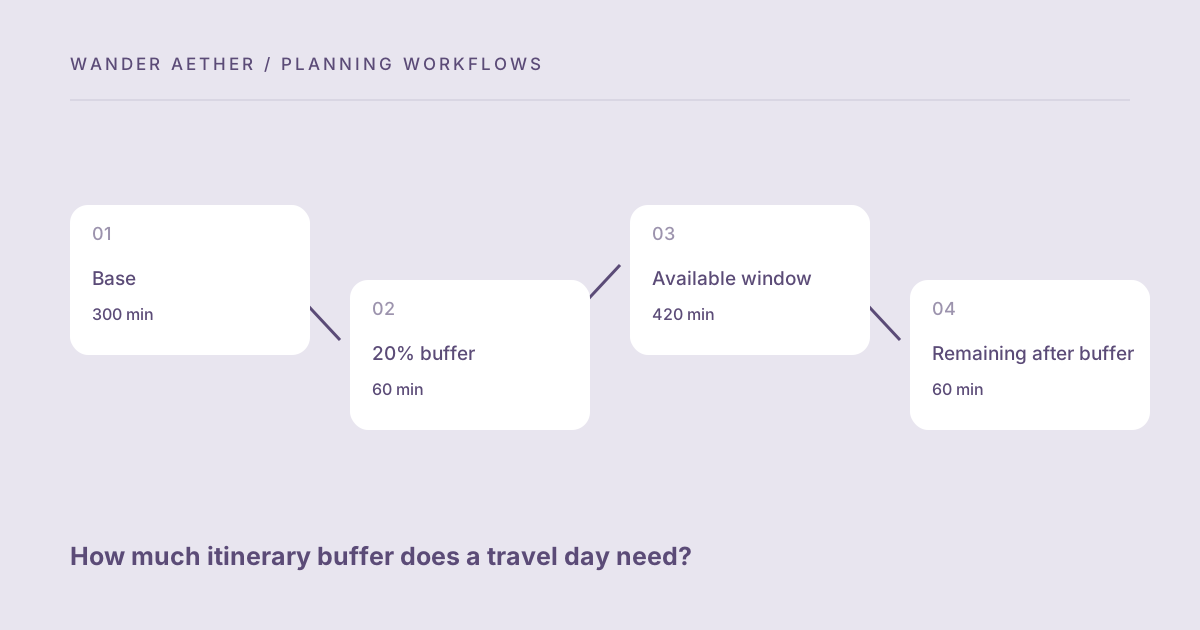
Test schedule margins against identified delays rather than assuming a universal percentage.
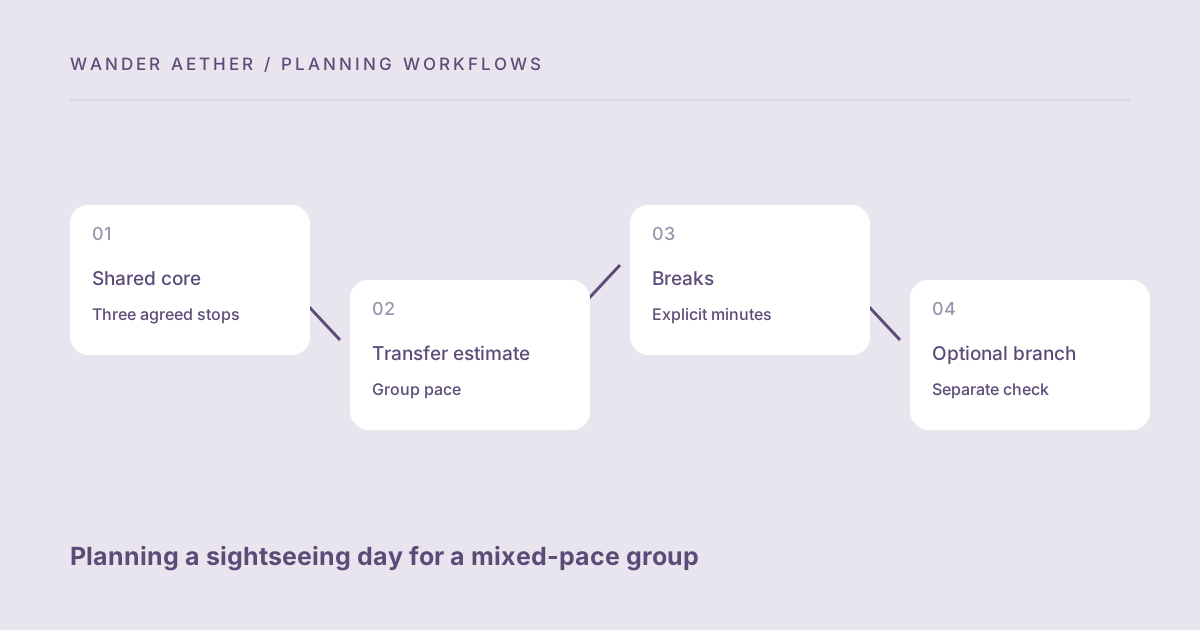
Adapt group stops, breaks and split options without assuming everyone moves alike.
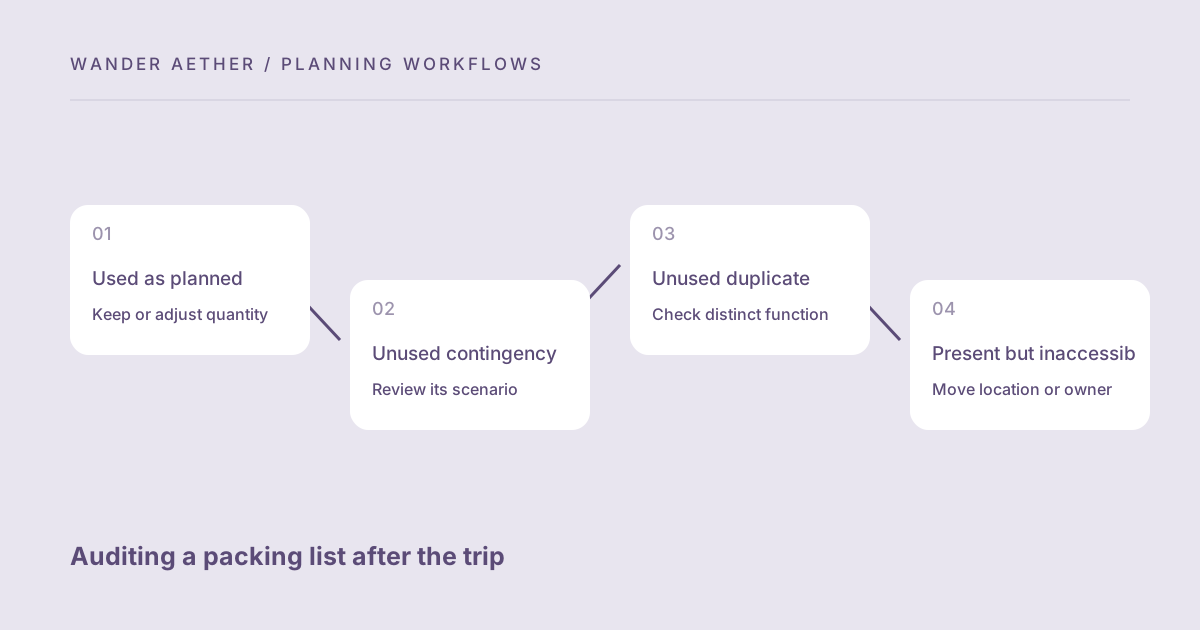
Use actual item use to improve the next trip-specific checklist.
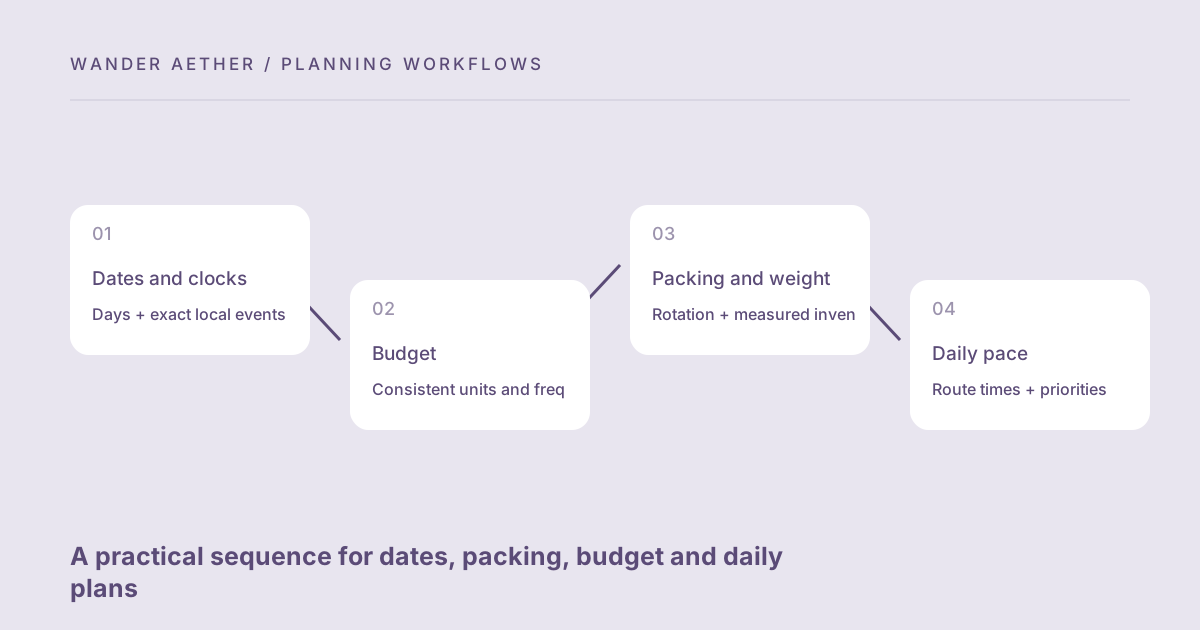
Connect travel calculations in an order that reduces rework.
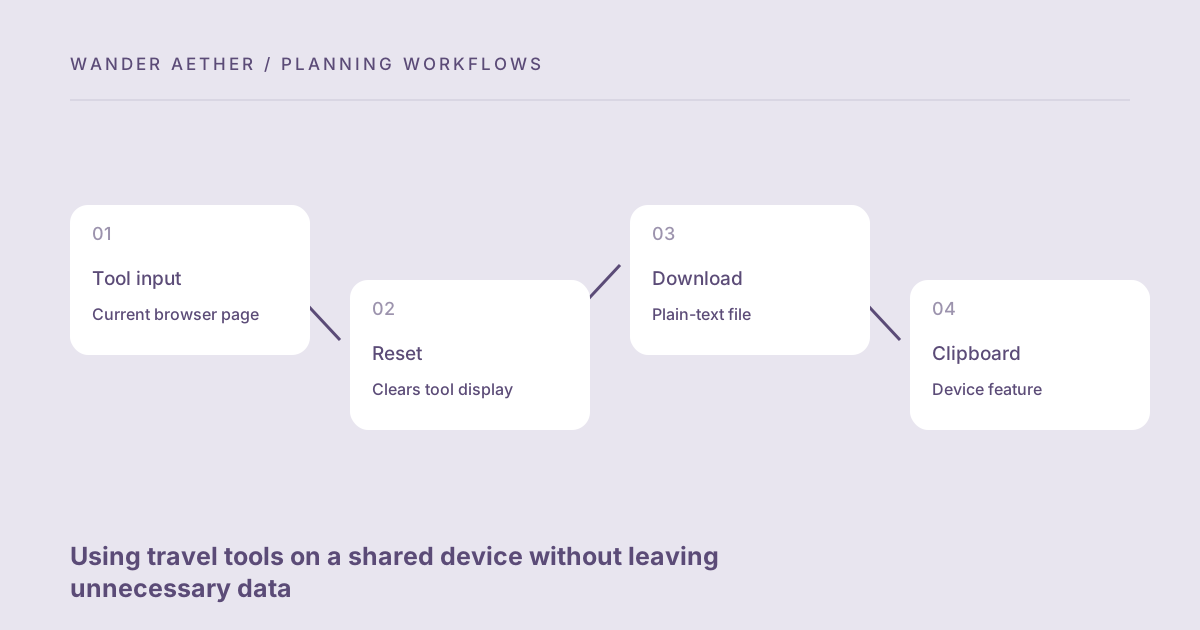
Understand local processing, exports and shared-device privacy boundaries.
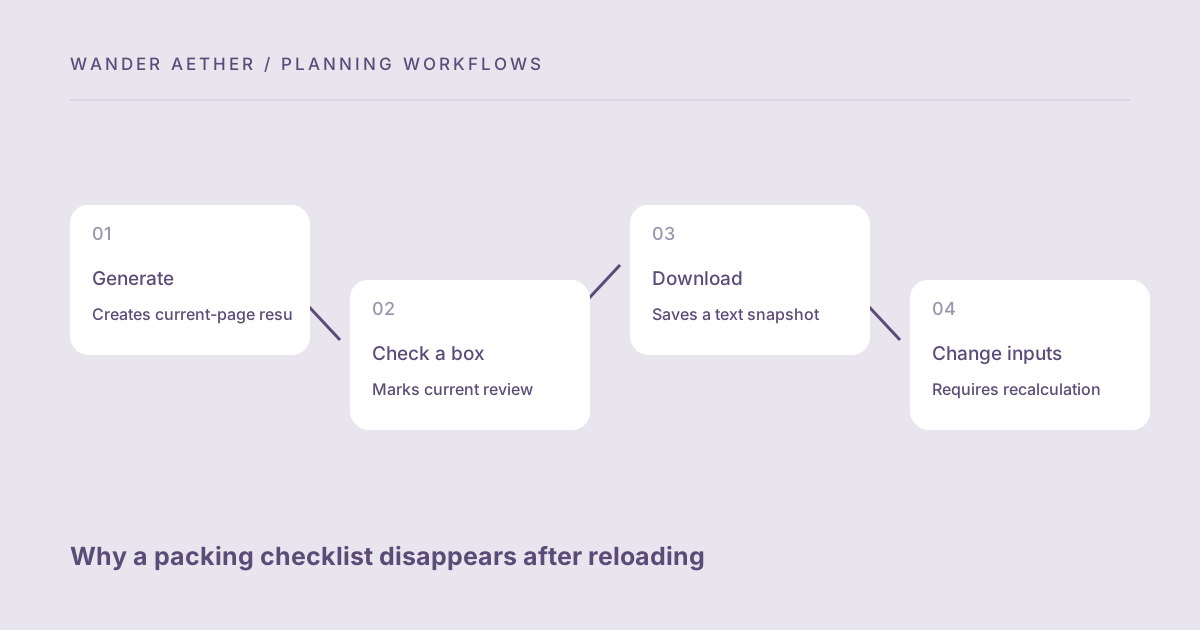
Recover the workflow when page-session checklists are not automatically persisted.
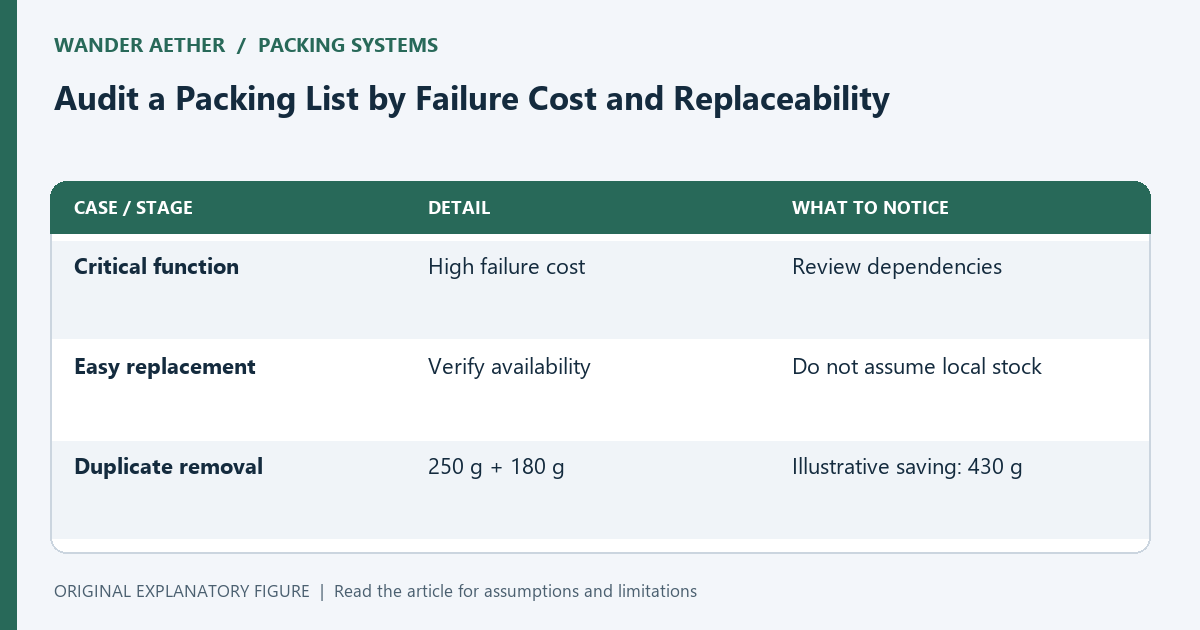
Review a small bag by what happens if an item is missing, how easily it can be replaced, and whether it duplicates another item.
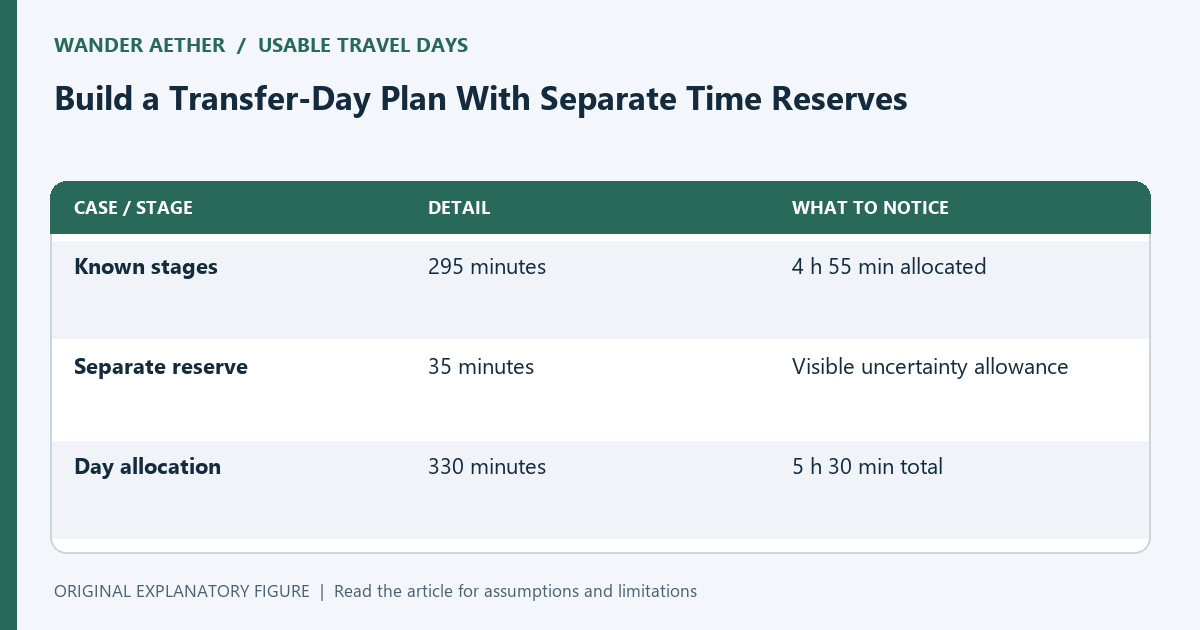
Map checkout, station access, boarding, and arrival tasks so a transfer day does not accidentally become a full sightseeing day.
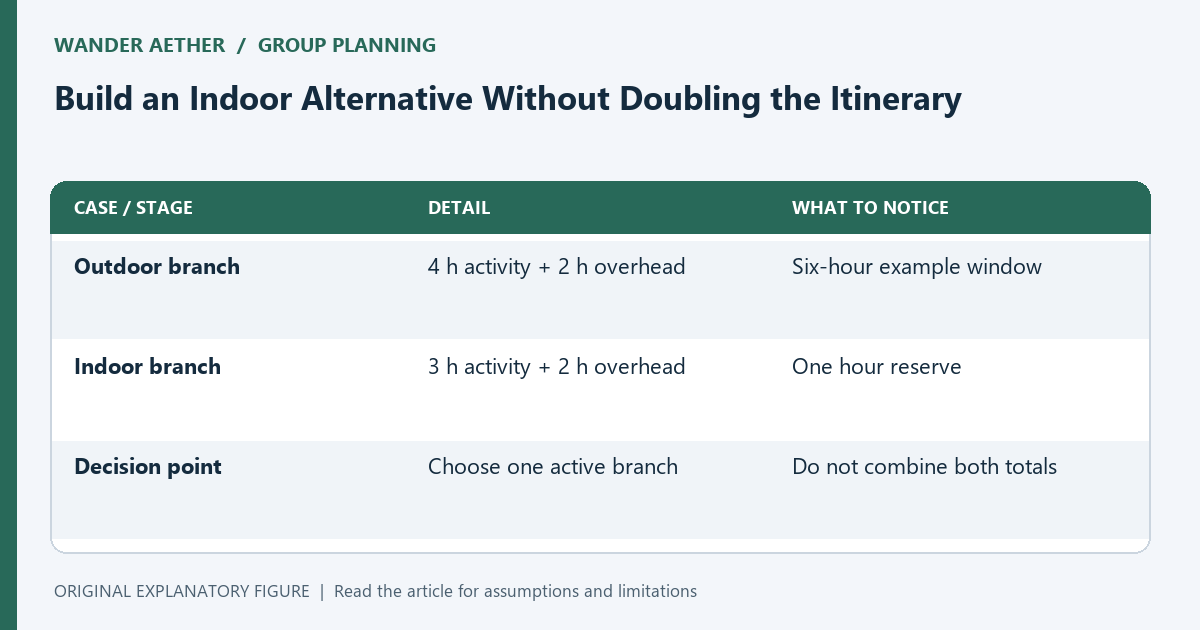
Create one decision point and a complete substitute plan instead of stacking backup activities onto the original day.
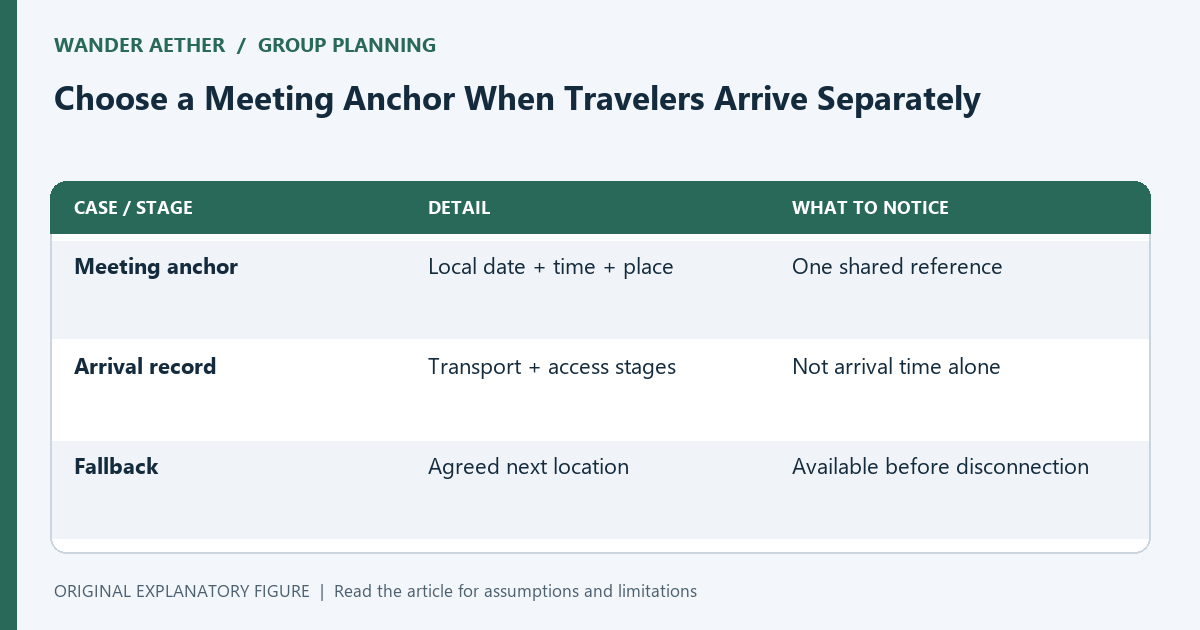
Record local dates, a specific meeting point, and a fallback so different arrivals do not depend on a vague shared clock.
Distinguish date difference, nights, inclusive calendar dates, and partial arrival or departure days.
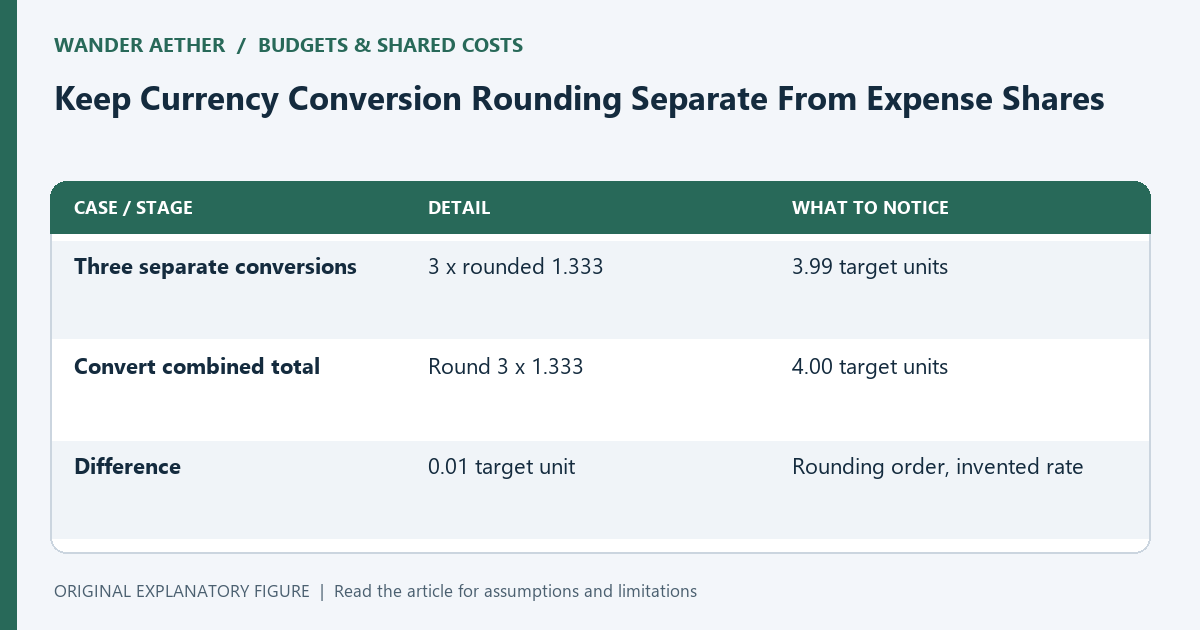
Use invented rates to inspect line-by-line versus total conversion and preserve a visible rounding adjustment.
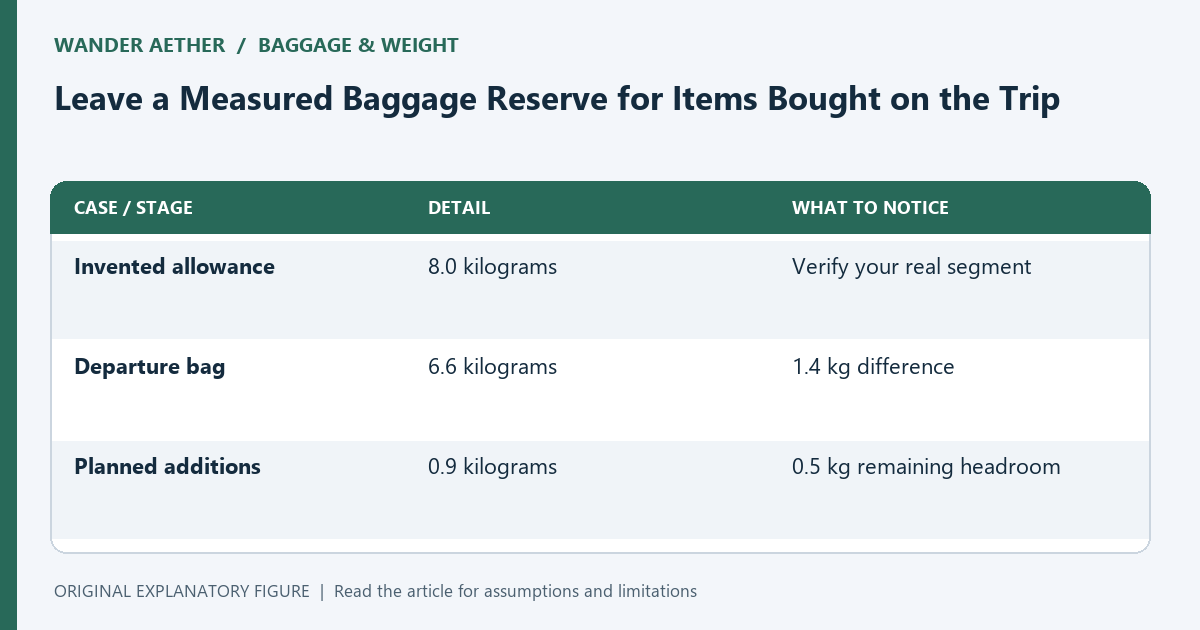
Compare departure weight, verified allowance, and return-item estimates without assuming the outbound bag represents the return trip.
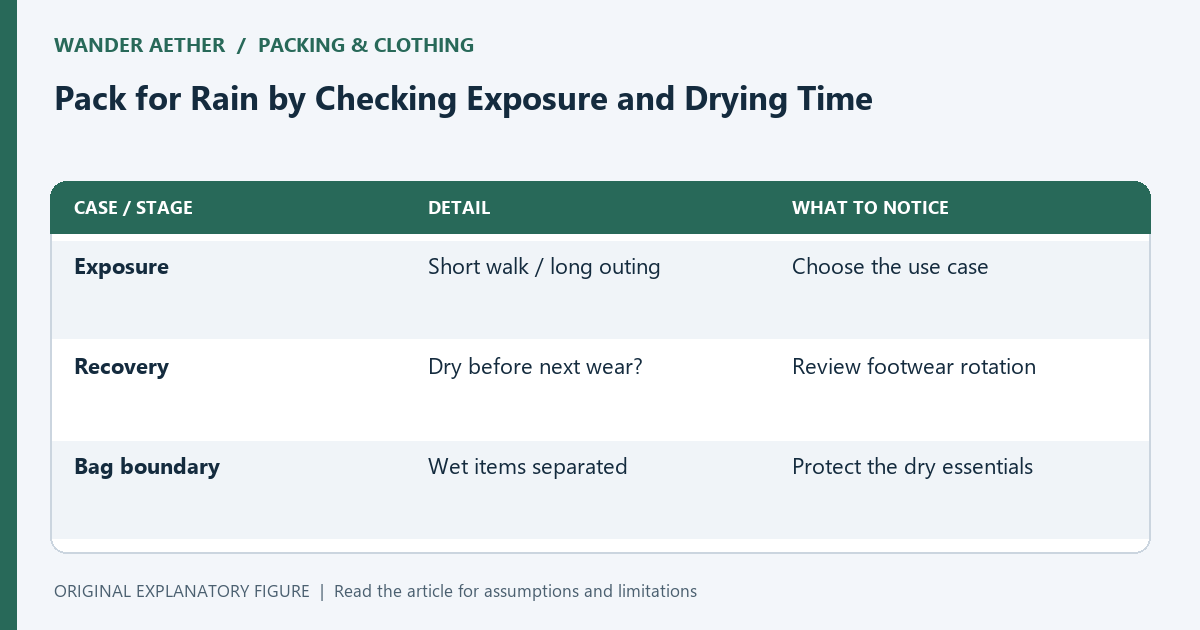
Choose a small wet-weather packing system around the time outdoors, footwear recovery, and access to drying space.
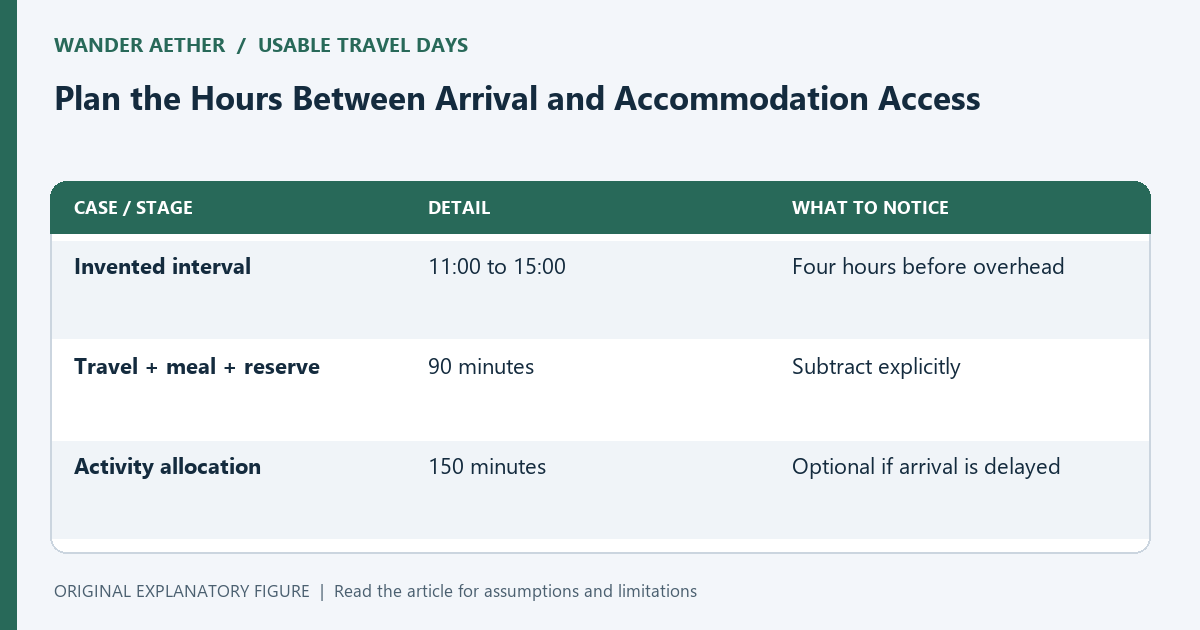
Separate arrival, luggage access, and check-in assumptions before filling the first day with activities.
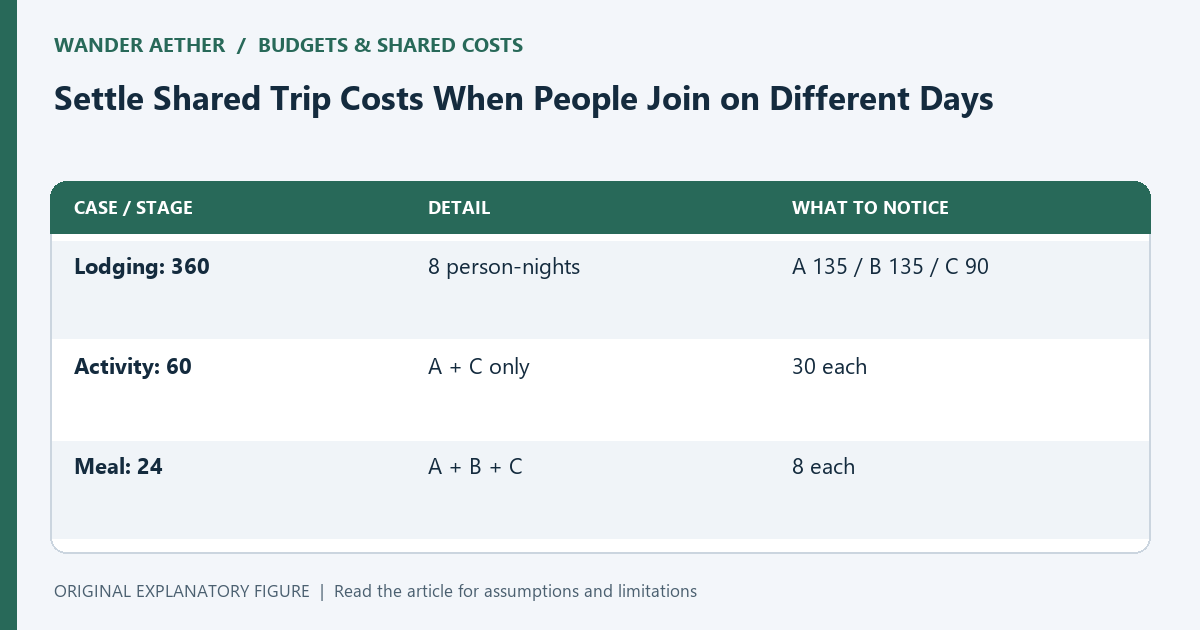
Separate whole-group expenses from night-based and individual costs with a transparent worked example.